
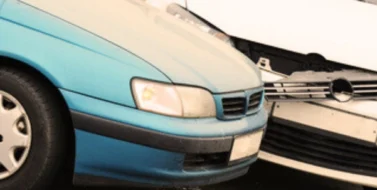
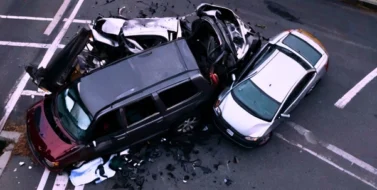
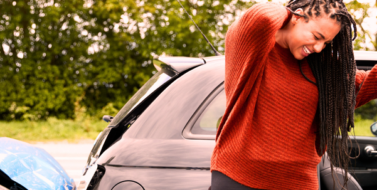
What do you call an accident where a car strikes a pedestrian? Is it a car accident or a pedestrian accident? When urban planners and mayors set out to eliminate traffic deaths, who do they target?
First, they examined the statistics and found that the number of traffic fatalities caused by car accidents attributable to speeding was 33,808 in 2013. The latest data available in the United States show pedestrian fatalities caused by car accidents are 4,473. The highest percentage of pedestrian fatalities occurred in New York, Philadelphia, Chicago, Houston, and Los Angeles.
90 percent of all pedestrians killed were in a single-car accident and 19% are killed by hit-and-run drivers. 73% of car accidents causing the death of a pedestrian were in urban areas with 70% of fatalities occurring at non-intersections.
More than a third (37%) of pedestrians were killed, and 1 in 8 (13%) of the drivers had blood alcohol concentrations of .08 g/dl or higher, the illegal limit in every State.
Car accidents resulting in the death of a pedestrian continue to increase by a solid 3% per year. So what were the conclusions reached?
The obvious: pedestrians and drivers do not obey laws and signals consistently and in addition, often used cell phones and earphones while walking and driving!
Simply put, there is no one target in the quest to prevent car accidents and pedestrian fatalities. Numerous urban proposals and projects now involve shared responsibilities among drivers, cyclists, pedestrians, traffic enforcers, and street designers, all of whom must change behaviors and attitudes.
Slowing traffic may be the most immediately effective measure for pedestrians’ safety as well as in the prevention of all car accidents. When struck by a vehicle going 40 miles an hour, the pedestrian has an 85 percent chance of dying and a higher chance of sustaining chance of sustaining a serious injury such as brain trauma. This compares with a 45 percent chance when struck at 30 miles per hour. Every 5 mph increment makes a huge difference in the pedestrian’s or driver’s ability to avoid an accident, serious injury or fatality.
Drivers tend to go as fast as conditions allow. There are many design strategies, called “traffic calming measures”, those force drivers to slow down. These measures are self-regulatory and may deter drivers from roads heavily used by pedestrians. For example, speed bumps, textured pavement, and raised crosswalks remind a driver of his speed and cause him to slow.
Roundabouts are equally effective but often cause confusion for all parties.
I personally love the signs that flash the speeds of passing cars. I’ve never seen it fail to cause everyone to hit the brakes!
The Federal Highway Administration lists many measures that, in addition to slowing traffic, can render pedestrians and cyclists more visible and street crossings safer. The pedestrian bridge is great but not always feasible but an alternative on a wide street could be the installation of mid-crossing pedestrian islands.
The unavoidable takeaway is that drivers, pedestrians, and cyclists all share responsibility for safety. Peds and cyclists can wear reflective gear, Drivers and cyclists can slow down, no one should drive, walk or cycle distracted, and all must keep vigilant, and follow traffic laws and signals-they serve to keep everyone in their own lane. Don’t depend on the other guy to follow the rules, you may have the right of way, but it’s no fun to explain that to a police officer from your hospital bed. You should contact an experienced car accident lawyer as soon as possible to help you with your case.