

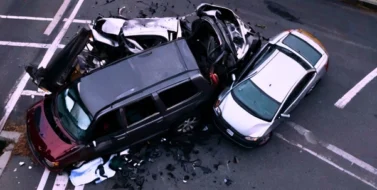


Fault in a left-turn accident in Illinois is often assumed to fall on the driver making the turn, but that is not always the full picture. While Illinois traffic law generally requires left-turning drivers to yield to oncoming traffic, liability can shift depending on speed, signals, and driver behavior at the time of the crash.
Left-turn accidents frequently occur at intersections, where multiple vehicles are moving in different directions at once. A single misjudgment in timing, distance, or visibility can result in a collision. Because these accidents often happen quickly, determining fault requires careful analysis of the circumstances rather than assumptions.
If you were involved in a left-turn crash, Lloyd Miller Law Group can help you understand your rights and evaluate your claim. Call 773-838-8100 today to discuss your case.
Table of Contents
Key Takeaways
- The left-turning driver is often presumed at fault, but exceptions exist
- Fault in a left-turn accident depends on right of way, speed, and driver conduct
- Evidence such as signals, witness accounts, and crash reports is critical
- Illinois comparative fault rules may divide liability between drivers
- Insurance companies often dispute fault in intersection-related crashes
Who Has the Right of Way in a Left-Turn Accident?
In most cases, Illinois law requires a driver making a left turn to yield to oncoming traffic that is close enough to pose a hazard. This rule is the starting point for determining fault in a left-turn accident. However, right of way is not absolute. If the oncoming driver is speeding, runs a red light, or otherwise violates traffic laws, liability may shift. Courts and insurance companies look at whether each driver acted reasonably under the circumstances.
Understanding how right of way applies is essential, but it is only one part of the analysis. Each driver’s actions before the collision are equally important.
When the Turning Driver Is Not Fully Responsible
There are situations where the driver making the left turn is not entirely at fault. For example, if the oncoming vehicle was traveling at an excessive speed, the turning driver may not have had enough time to react safely. Similarly, if the oncoming driver ignored a traffic signal or failed to use headlights in low visibility conditions, those factors may reduce or shift liability.
How Fault Is Determined in Intersection Left-Turn Crashes
Most left-turn accidents occur at intersections, which makes them more complex than other types of collisions. Determining fault in a left-turn accident often requires a detailed review of traffic signals, vehicle positions, and timing.
The process of establishing liability is similar to other intersection cases. Learning about fault in intersection accidents can provide insight into how evidence is used when drivers disagree about what happened.
Key Evidence Used to Assign Fault
Evidence plays a central role in determining liability. Police reports often provide an initial assessment, but they are not always definitive. Additional evidence may include:
- Traffic camera or dashcam footage
- Eyewitness statements
- Vehicle damage patterns
- Intersection signal timing
These elements help reconstruct the sequence of events and clarify which driver had the right of way.
Common Causes of Left-Turn Accidents
Understanding what causes these crashes helps explain how fault in a left-turn accident is assigned. Many of these accidents result from errors in judgment rather than intentional misconduct. One of the most common causes is misjudging the speed or distance of oncoming traffic. A driver may believe there is enough time to complete the turn when there is not.
Distracted driving is another major factor. A driver who is not fully focused on the road may fail to notice approaching vehicles or traffic signals. Speeding also contributes, as it reduces reaction time and increases the severity of collisions.
Visibility issues can also play a role. Poor lighting, weather conditions, or obstructed views may affect a driver’s ability to safely complete a turn. However, drivers are still expected to proceed with caution under these conditions. Failing to adjust behavior based on visibility can contribute to liability.
Can Both Drivers Be at Fault?
More than one driver can share fault in a left-turn accident. Illinois follows a modified comparative fault system, which allows liability to be divided based on each party’s actions.
For example, a turning driver may be partially at fault for failing to yield, while the oncoming driver may also share responsibility for speeding or running a signal. In these cases, compensation is adjusted based on the percentage of fault assigned to each driver.
How Comparative Fault Affects Compensation
If you are partially responsible, your compensation may be reduced. For instance, if you are found 30% at fault, your recovery will be reduced by that amount. If you are more than 50% responsible, you may not be eligible to recover damages. This makes it critical to accurately establish fault and avoid unnecessary blame.
How Insurance Companies Evaluate Left-Turn Claims
Insurance companies often start with the assumption that the left-turning driver is at fault. However, they will still investigate the details of the crash to determine whether that presumption applies. Adjusters review evidence, statements, and reports to assess liability. In many cases, they may attempt to assign partial fault to reduce the amount they have to pay. It is not uncommon for injured drivers to receive a low settlement offer early in the process. These offers may not fully account for medical expenses, lost income, or long-term impacts.
Why Disputes Are Common in Left-Turn Cases
Left-turn accidents often involve conflicting accounts. Each driver may believe they had the right of way, which can lead to disputes over liability. Insurance companies may use these disputes to delay claims or reduce payouts, especially when evidence is unclear.
What Happens if Insurance Coverage Is Not Enough?
Even when fault in a left-turn accident is established, recovering full compensation can depend on available insurance coverage. If the at-fault driver has limited coverage, it may not be enough to cover all damages.
Understanding what happens if the at-fault driver doesn’t have enough insurance is important for evaluating your options. Additional coverage, such as uninsured or underinsured motorist policies, may play a role in these situations.
Medical bills, lost wages, and other damages can add up quickly. When insurance coverage is limited, pursuing full compensation may require exploring multiple sources of recovery.
How Legal Representation Can Influence Fault Determination
Establishing fault in a left-turn accident requires more than identifying who turned and who went straight. It involves analyzing evidence, interpreting traffic laws, and challenging assumptions. Working with a car accident lawyer can help ensure that your case is evaluated thoroughly. Legal representation can also help address disputes with insurance companies and improve the likelihood of a fair outcome.
What Drivers Should Understand About Left-Turn Liability
Fault in a left-turn accident is not always as simple as it appears. While the turning driver is often presumed responsible, each case depends on the evidence. Drivers should understand that liability can shift based on behavior, road conditions, and other contributing factors. Careful analysis is required to determine who is truly at fault.
Moving Forward After a Left-Turn Accident
Determining fault in a left-turn accident in Illinois requires a detailed understanding of traffic laws, evidence, and insurance practices. These cases often involve multiple factors, and liability is not always clear at first.
If you have been involved in a left-turn crash, Lloyd Miller Law Group is ready to help you navigate the process and pursue the compensation you deserve. Call 773-838-8100 today to get started.