

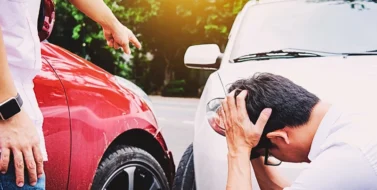

The Illinois modified comparative negligence law is instrumental in determining fault in Chicago intersection accidents. This rule apportions a percentage of liability to each driver involved in an accident. A driver who committed a traffic violation by failing to yield to oncoming traffic, speeding through a red light, or failing to maintain a safe driving distance may be found liable. Anyone whose fault is above 50% is barred from recovering damages.
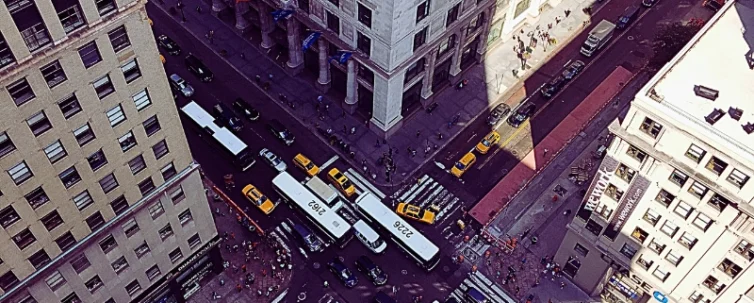
A thorough investigation must be conducted to gather crucial evidence that helps establish fault. Evidence that can be instrumental in liability determination includes police reports, traffic surveillance footage, and physical evidence at the accident scene.
Fault isn’t always apparent in intersection accidents. The car accident lawyers at Lloyd Miller Law will investigate the accident, gather proof, determine the liable party (or parties), and fight for your rights and best interests. Call us now at 773-838-8100 for a free, no-obligation consultation.
Table of Contents
The Common Causes of Intersection Accidents in Chicago
Chicago recorded 101,023 crashes in 2023. The Federal Highway Administration reports that approximately 28% of all accidents leading to death occur at intersections.
Intersection collisions in Chicago occur due to:
Driver Error
Driver error is the leading cause of collisions at intersections. It primarily stems from violations of traffic rules. Sometimes, even minor accidents can cause a traumatic brain injury. So, it’s crucial to be alert and focused when navigating intersections.
Poor Intersection Design
Some accidents occur because of poor intersection design. An intersection may meet the approved standards, but the layout may confuse drivers, creating safety risks. For example, an intersection with sharp corners and overgrown vegetation forces drivers to take wider corners. That puts them directly in the path of oncoming vehicles, resulting in T-bone crashes.
Limited signal timing is another example of poor intersection design. The traffic signals may change quickly, leaving drivers insufficient time to complete left turns. This forces most left-turners to rush through, creating risky situations on the road.
Inclement Weather
Bad weather may also cause collisions at intersections. During wet conditions, tire traction becomes reduced. So, vehicles require longer braking distances.
Additionally, fog, snow, and heavy downpours reduce visibility. Drivers, especially those driving at night, may not clearly see traffic signs. Oncoming vehicles may disappear in the fog or rain.
How Fault in Chicago Intersection Accidents Is Determined When Drivers Dispute Responsibility
Many intersection collisions are chain-reaction crashes or pileups. They often involve more than two drivers. The unclear circumstances of the accident may compel drivers to blame each other. Investigators usually consider key factors to determine fault when drivers dispute liability. These include:
Right-of-Way Violations
Right-of-way rules are designed to streamline traffic and prevent accidents. A left-turning driver who fails to yield to an oncoming car is primarily at fault for a car accident at an intersection.
Traffic Light Violations
The other key factor in determining fault is failure to obey traffic signals. A driver who runs a red light is usually liable for accidents at the intersection.
Rear-End Collisions
In a chain-reaction accident, the driver who caused the first rear-end crash is often liable. However, even in cases where fault seems straightforward, other factors may prove otherwise. That’s why you should get a car accident lawyer involved immediately after the crash to ensure no details are left uncovered.
Gathering Evidence to Prove Liability in Intersection Collisions
Claiming that you were injured in an intersection accident because of another party’s negligence is not enough. You must back up your claim with evidence. Insurers will investigate the accident and try to disprove or discredit your claim. You can be one step ahead by gathering the following evidence immediately after the accident:
Police Report
In Illinois, it’s mandatory to report an accident involving injuries, fatalities, or property damage exceeding $1,500. Minor car accidents are eligible for reporting, especially if they result in serious injuries.
Prompt reporting allows the responding officer to gather facts about the accident and compile a police report. The report will detail crucial information that can help prove fault, including any traffic citations issued, a description of the accident scene, and the officer’s opinion on what caused the accident and who may be liable.
Physical Evidence (at the Scene)
Take clear photographs of your injuries, the wreckage, and the positions of every vehicle. Ensure your pictures capture skid marks and debris scattered around the accident scene. Additionally, identify any eyewitnesses who can give an account of the accident. Obtain their contact information so you may access them when the need arises. Obtain the plate numbers of each vehicle and the drivers’ names and insurance details.
Your lawyer can write a preservation of evidence letter to instruct liable drivers, responding police officers, and other third parties to preserve car accident evidence.
Video Surveillance Footage
Most Chicago intersections have traffic surveillance cameras. Security surveillance cameras from neighboring buildings may also have captured the accident in real time. The footage can show how the accident occurred. It may be the key to dispelling doubts or disputes about liability.
Were you injured in a Chicago intersection accident? Car accident lawyers at Lloyd Miller Law are prepared to hold the liable party financially responsible. Contact us to discuss your legal situation with one of our seasoned lawyers.
Frequently Asked Questions
How is fault determined in a multi-driver intersection accident?
Fault is proven after considering several key factors. That includes the actions of the driver who failed to yield, ran a red light, or violated other rules governing traffic at intersections.
What evidence helps prove liability in a Chicago intersection accident?
Several pieces of evidence can be used when proving liability in car accidents. They include videos and photos of the accident scene, witnesses’ testimonies, police reports, and traffic surveillance footage.
Can multiple drivers share responsibility for an accident at an intersection?
Multiple drivers may share liability. Typically, the one who breached traffic rules is primarily at fault. However, Illinois follows the “modified comparative negligence” rules. Under this law, your compensation is reduced by the percentage of fault you contributed. You won’t receive any compensation if your percentage of fault exceeds 50%.